What does a Pochettino team look like?
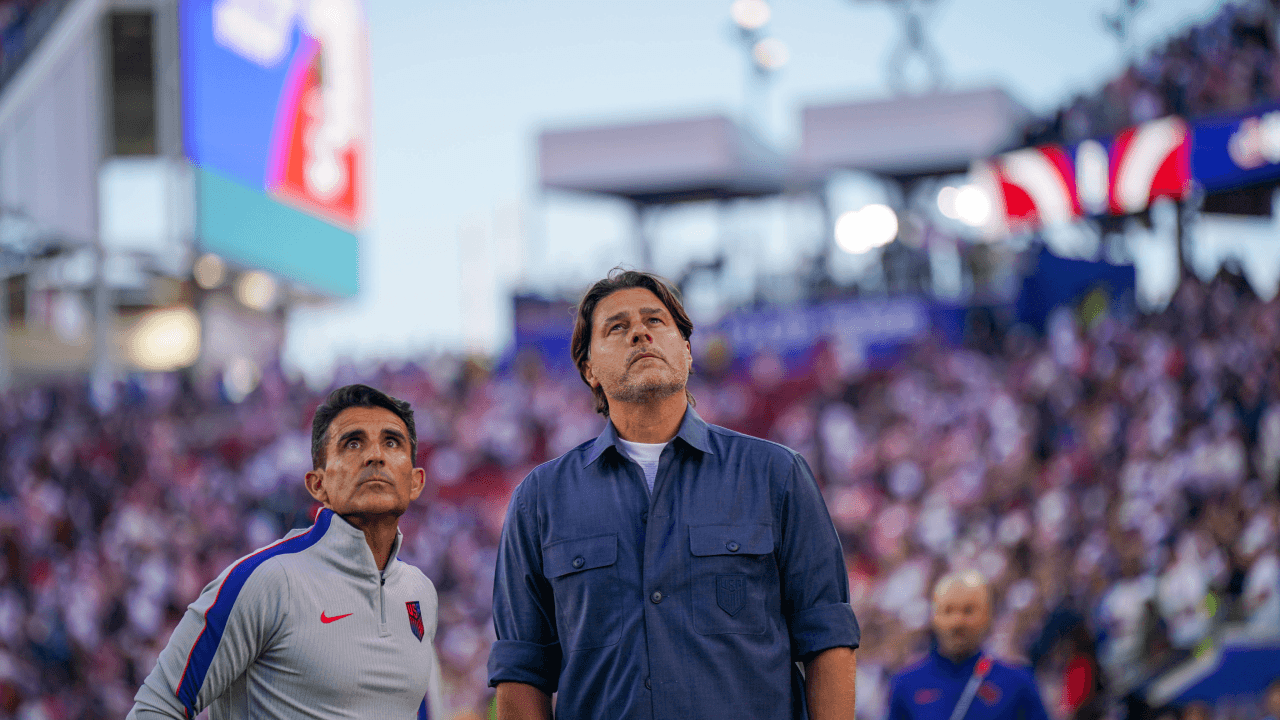
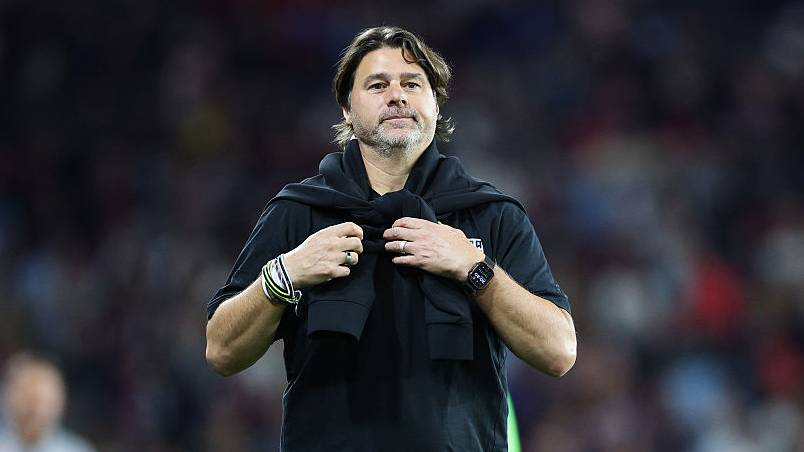
Mauricio Pochettino has been named Manchester United’s new manager following Michael Carrick’s sacking. His teams have been defined by pressing, youthful energy and fast attacks — but his recent roles show a coach increasingly willing to adapt.
Premier League · Tactical analysis
The 54-year-old returns to England after spells at Southampton, Tottenham and Chelsea, having most recently led the United States to the last 16 of the World Cup. His 18 months at Paris Saint-Germain also offered a different test: fitting his ideas around an exceptional attacking trio.
Those experiences reveal both a recognisable blueprint and the compromises that may shape his Manchester United side.
Southampton: the shape stayed, the demands changed
A 4-2-3-1 quickly became Pochettino’s preferred formation at Southampton. It was a similar shape to the one used by predecessor Nigel Adkins, but the playing style changed dramatically, with pressing high up the pitch becoming central.
His selection remained largely consistent. Dejan Lovren and Victor Wanyama were the only major signings to become starters during his season and a half in charge.
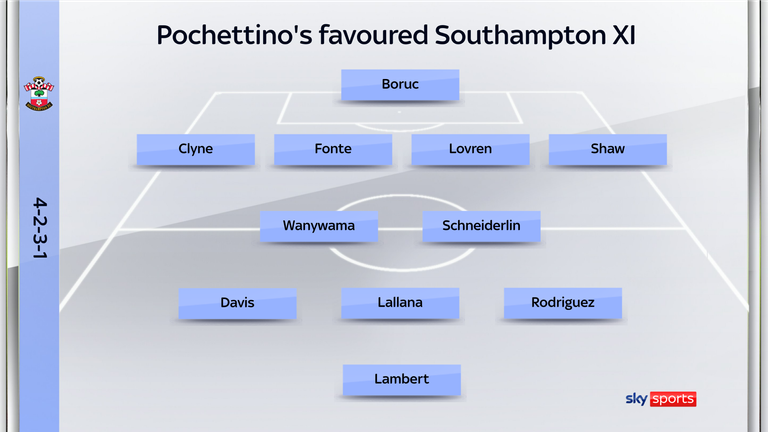
Instead, he improved the players already at the club. Adam Lallana, Morgan Schneiderlin, Jay Rodriguez, Luke Shaw and Nathanial Clyne flourished once they had adapted to his demands.
“When Pochettino came in, it was very apparent from day one there would be no luxury player in his team.”
Lallana described his earlier role as playing off the left or at No 10, “almost a luxury-type player”. Pochettino’s arrival made clear that everyone would have to contribute without the ball.
Jamie Redknapp believes the new manager’s first task at United will similarly be to get the squad fit, alongside improving the back four.
Spurs: youthful dynamism at its peak
At Tottenham, the same aggression and intensity out of possession became unmistakable. Quick, vertical passes drove fast-paced attacks in the style of Marcelo Bielsa, whom Pochettino counts alongside Sir Alex Ferguson as his biggest coaching influence.
His predominant system was again 4-2-3-1. Young players flourished, with Dele Alli at No 10 and Harry Kane at No 9 forming a particularly effective partnership.
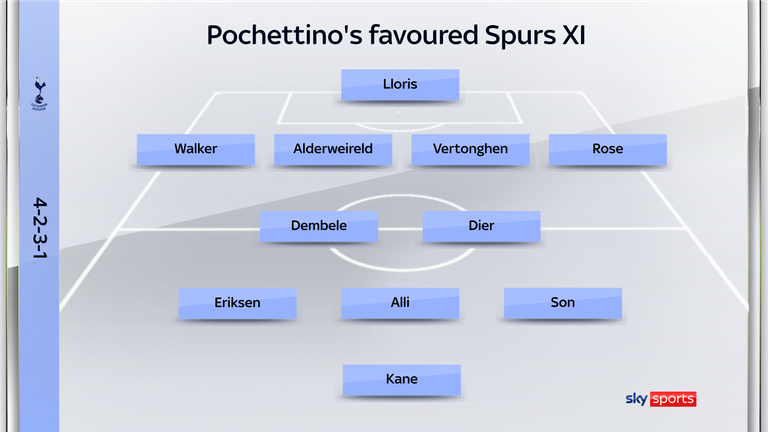
Width from full-backs
The full-backs pushed forward, while a central midfielder — usually Eric Dier — dropped back to form a back three in possession.
Attackers close together
That movement allowed Alli, Christian Eriksen and Heung-Min Son to operate close to Kane.
The transformation brought a Champions League final and three consecutive top-three Premier League finishes. But sustaining that football proved harder as the team aged.
With heavier legs and inadequate replacements arriving through the transfer market, Spurs struggled to maintain their intensity. Pochettino’s departure in 2019, five years after his appointment, marked the end of that cycle.
PSG demanded a different approach
More than a year after leaving Spurs, Pochettino returned to management at Paris Saint-Germain. There, his tenure became an exercise in adapting his philosophy to his players.
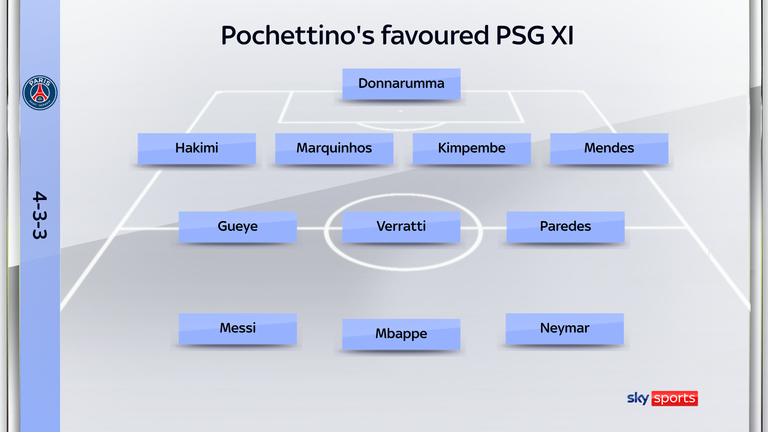
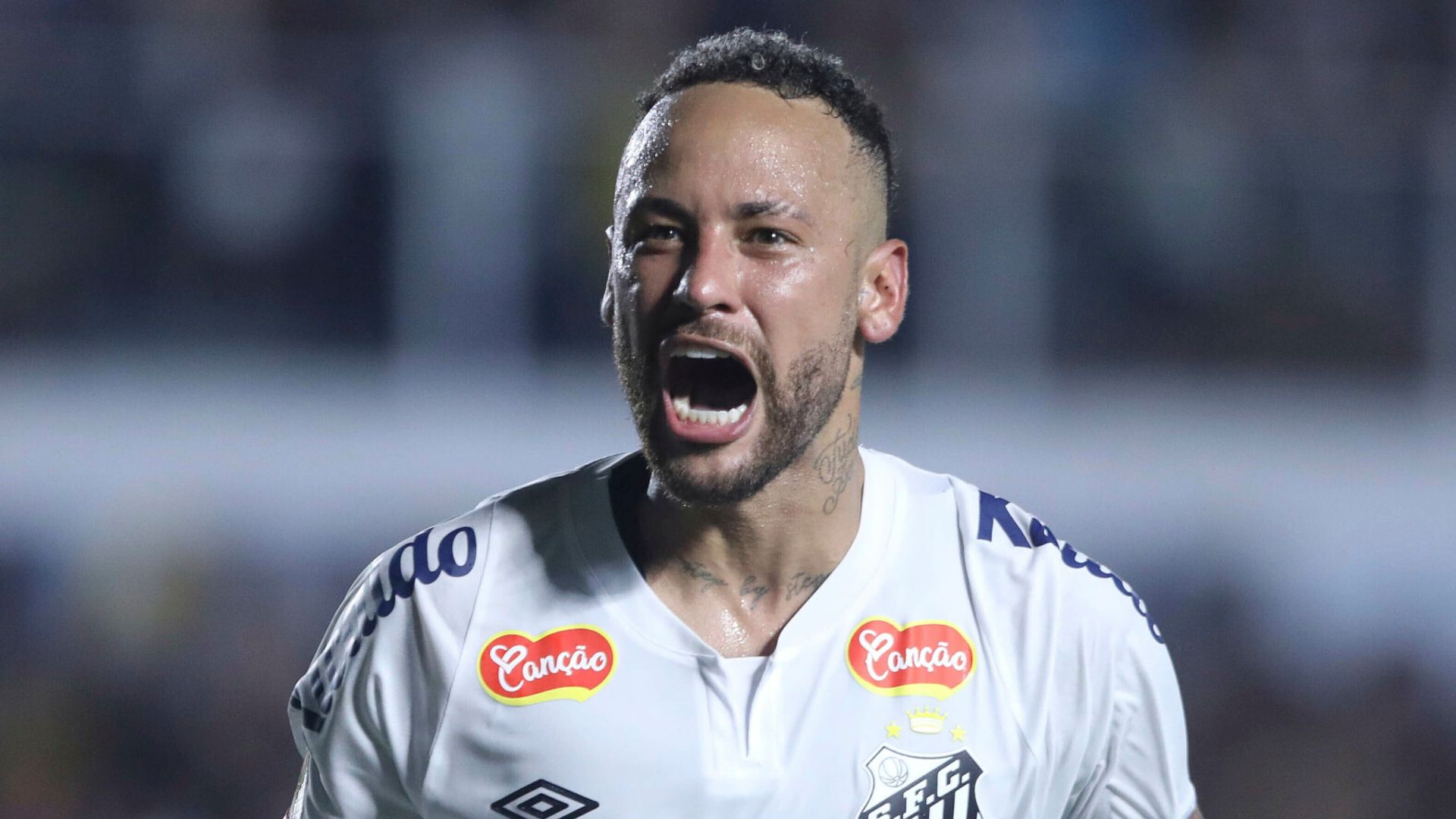
Accommodating Lionel Messi, Kylian Mbappe and Neymar meant moving away from the high pressing that had defined his earlier teams. His superstar front three were not predisposed to such a demanding approach without the ball.
He most often used a 4-3-3, with Achraf Hakimi and Nuno Mendes providing attacking thrust from full-back. Yet the circumstances left his PSG team some distance from his preferred style.
Chelsea: familiar formation, elusive intensity
After his appointment in 2023, Pochettino experimented with a 3-4-2-1 in some early Chelsea matches before returning to 4-2-3-1. Cole Palmer became the latest attacker to thrive under him, following the examples of Alli and Kane.
22
Premier League goals
11
Premier League assists
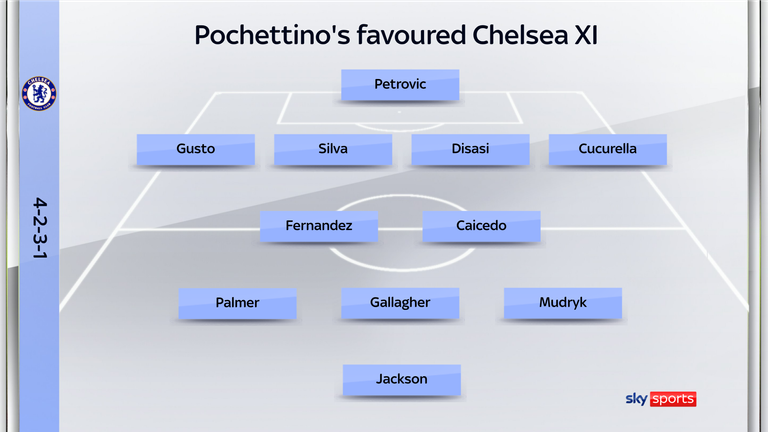
Across the team, however, transmitting his ideas proved difficult. In April of his only season at Stamford Bridge, he questioned the players’ mentality and work-rate.
“We still need to create this mentality that is going to help us,” he said. “You need to demand more from yourself and your team-mates.”
The running figures illustrated the gap. His Spurs teams consistently ranked among the Premier League’s leading sides for distance covered; Chelsea ended 2023/24 with the division’s third-lowest total.
USA: greater freedom, collective pressing
With the United States, Pochettino continued to adapt. He switched between a back three and a back four, moving away from the more rigid positional game of his earlier career.
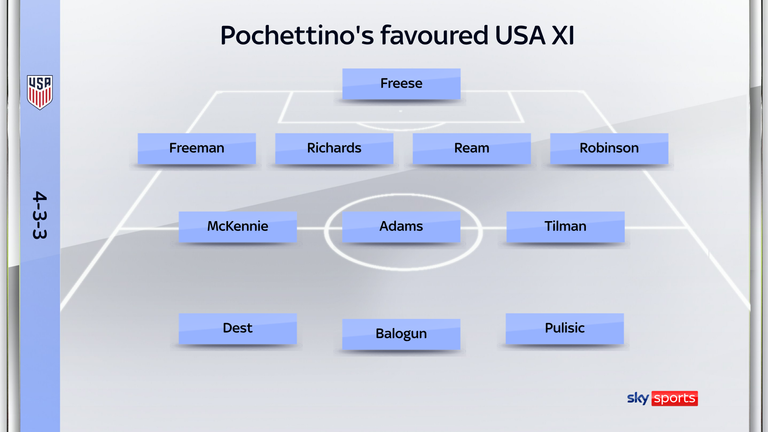
At the World Cup, his most-used formation was 4-3-3, but the attackers were encouraged to rotate positions and play with greater fluidity. That approach helped the USA overpower Paraguay, Australia and Bosnia and Herzegovina before Belgium eliminated them.
He was also praised for building a collective. Co-ordinated high pressing became central to their play, with an average of eight high turnovers per game — among the highest figures in the competition.
Manchester United: the likely shape, and the harder question
Initially, Pochettino’s United may resemble Carrick’s in formation. His predecessor also preferred 4-2-3-1, although the new manager could make adjustments to support a higher defensive line and a more athletic team.
Potential adjustments
- Leny Yoro
- His recovery speed could be valuable at centre-back if United defend high up the pitch.
- Patrick Dorgu
- His athleticism could be preferred to the experience of the 31-year-old Luke Shaw.
- Carlos Baleba
- His physical qualities are likely to make him important in midfield.
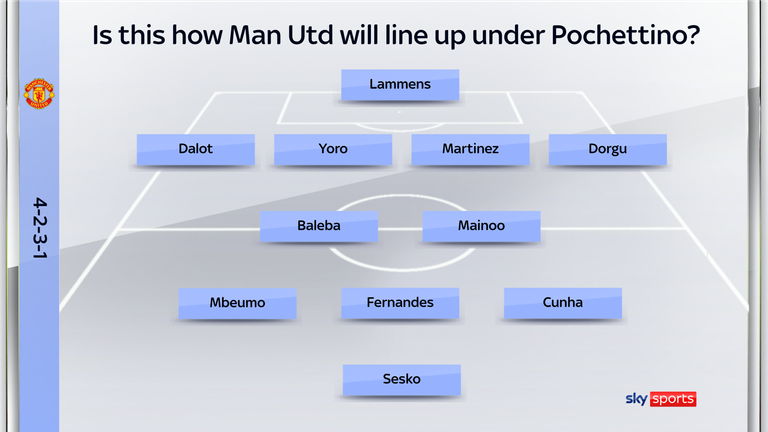
As in some of his previous jobs, Pochettino may have to accept limits on how much intensity he can demand from the available players. He typically favours youth, yet United have one of the Premier League’s oldest starting line-ups this season. Could Shea Lacey offer an injection of energy?
Bruno Fernandes is expected to be vital at No 10. At 32, though, can he consistently run beyond the striker as a young Alli did alongside Kane?
In possession, he may seek to develop United’s threat from direct attacks and counter-attacks, drawing on his Spurs and Chelsea teams. Transforming their pressing will be a substantial task.
“If you don’t change, you die,” Pochettino said recently. His willingness to evolve is likely to be needed at United, where he inherits a very different squad from the one that powered his best years at Spurs.